Looking for the Best Way to Cover Grey Hair? Start Here.
The first few grey strands often raise the same question: Should I choose henna or hair colour? While both can help colour grey hair, they work in different ways and are designed for different needs. Choosing the wrong option can leave you disappointed with the colour, increase maintenance, or simply fail to give you the result you expected.
The good news is that there isn’t a “right” or “wrong” choice—there is only the choice that’s right for your hair.
Some people prefer henna because they enjoy naturally inspired hair care and want colour with conditioning benefits. Others choose modern hair colour products because they need quicker application, better grey coverage, or a wider choice of shades. Understanding these differences before you buy will help you make a smarter decision and achieve better-looking results.
In this guide, we’ll compare henna and modern hair colour in a practical, unbiased way. Instead of promoting one over the other, we’ll explain where each option performs best, who it is suitable for, and how to choose the solution that matches your hair type, lifestyle, and colouring goals.
Whether you’re colouring your hair for the first time or looking for a better alternative, this guide will help you make a confident decision.
Which Is Better for Grey Hair?
If you’re looking for naturally inspired colouring that also helps improve the appearance of your hair, Organic Henna Powder can be an excellent choice.
If your priority is complete grey coverage, quicker application, and consistent colour results, products such as creme hair color or gel hair color may be more suitable.
The best option depends on your hair type, colouring goals, and maintenance routine—not simply on whether the product is natural or modern
Is Henna Better Than Hair Colour for Grey Hair?
Henna is ideal for people who prefer naturally inspired colouring with conditioning benefits, while modern hair colour products offer faster application, wider shade options, and more consistent grey coverage. The right choice depends on your hair type, percentage of grey hair, desired results, and lifestyle.
Why This Comparison Matters
Many people believe that henna and hair colour are competing products. In reality, they solve different problems.
For example:
- Someone with a few scattered grey strands may value hair nourishment just as much as colour.
- Someone with 70–80% grey hair may prioritise quick, even coverage.
- Some people enjoy preparing traditional hair treatments at home.
- Others need a colouring solution they can apply in less than an hour.
Choosing a product without understanding these differences often leads to frustration.
This guide will help you understand:
- How henna and hair colour actually work
- Which option gives better grey coverage
- Which lasts longer
- Which is easier to maintain
- Which is better for different lifestyles
- Which product is likely to suit your hair
Rather than following trends or advertisements, you’ll learn how to make a decision based on your own needs.
Why Does Hair Turn Grey?
Hair gets its colour from melanin, a natural pigment produced inside the hair follicle. As we age, melanin production gradually decreases, causing new hair to grow grey, silver, or white.
Although ageing is the most common reason, other factors may influence how early grey hair appears, including:
- Genetics
- Nutritional deficiencies
- Oxidative stress
- Hormonal changes
- Lifestyle habits
- Environmental exposure
Grey hair is completely natural. However, because grey strands are often coarser and more noticeable, many people choose to colour them to achieve a more even, youthful-looking appearance.
Understanding Henna for Hair
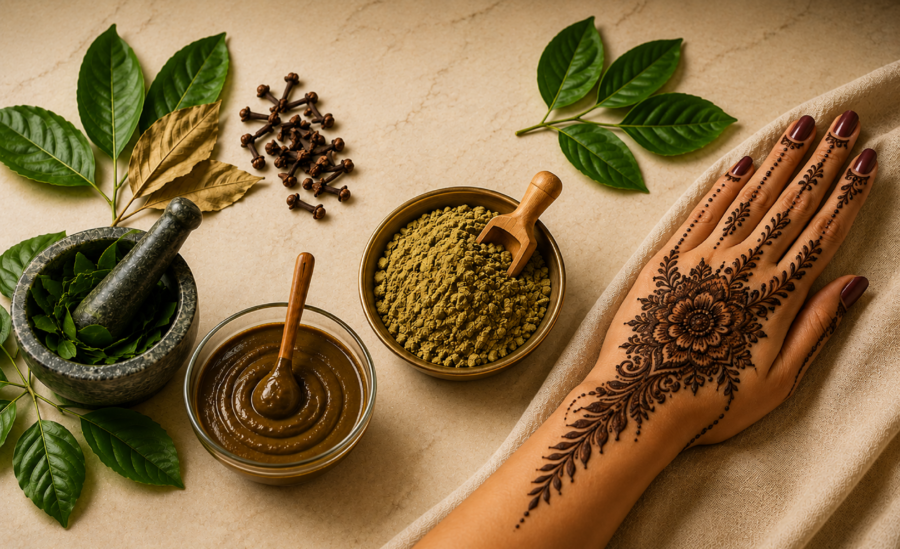
Henna has been used as a natural hair colouring ingredient for centuries. Made from the leaves of the Lawsonia inermis plant, pure henna colours the outer layer of the hair while also helping improve its appearance and texture.
One reason many people continue choosing Organic Henna Powder is that it combines colouring with conditioning benefits. Instead of simply changing the hair colour, it can leave hair looking shinier, smoother, and fuller after regular use.
For those who prefer convenience, henna paste for hair offers a ready-to-use alternative that simplifies application while retaining the traditional colouring experience.
It’s important to understand that pure henna produces natural shades rather than dramatic colour transformations. The final colour depends on several factors, including your original hair colour, hair texture, application method, and processing time. This natural variation is one reason many users appreciate henna, as it creates a softer and more authentic-looking finish.
Understanding Modern Hair Colour
Hair colouring technology has evolved significantly over the years. Today’s formulations are designed to provide faster application, more predictable colour results, and a broader range of shades while making home colouring easier than ever.
Depending on your preferences, different formulations offer different experiences.
For example:
- gel hair color spreads easily and is often chosen for controlled application.
- cream hair color has a richer texture that many users find easier to distribute evenly, especially when colouring the entire head.
- hair color shampoo provides a convenient solution for people looking for a quicker colouring routine with minimal preparation.
If your goal is to achieve darker, natural-looking results, choosing a high-quality natural black hair dye can also be an effective option, depending on your preferred formulation and colour expectations.
Modern hair colour doesn’t replace henna—it simply offers another solution for people whose priorities are convenience, speed, and consistent grey coverage.
Expert Insight
The best colouring product isn’t the one everyone is talking about—it’s the one that suits your hair. Your percentage of grey hair, desired shade, lifestyle, maintenance routine, and hair condition all play a much bigger role in the final result than whether you choose henna or hair colour.
Henna vs Hair Colour: Quick Comparison
| Feature | Henna | Hair Colour |
| Colour Source | Plant-based colouring | Specially formulated colouring system |
| Grey Hair Coverage | Good | Excellent |
| Shade Options | Natural tones | Wide variety of shades |
| Application Time | Longer | Faster |
| Hair Conditioning | Excellent | Depends on formulation |
| Colour Consistency | Natural variation | More predictable |
| Maintenance | Moderate | Regular touch-ups |
| Best For | Naturally inspired colouring | Quick and consistent colouring |
Before You Choose, Ask Yourself These Questions
Before deciding which option is right for you, take a moment to think about your needs:
- How much of your hair has turned grey?
- Do you prefer natural-looking shades or bold colour changes?
- How much time can you spend colouring your hair?
- Is hair conditioning just as important as colour?
- Are you comfortable with regular touch-ups?
- Do you want a ready-to-use product or a traditional colouring experience?
Answering these questions first will make choosing the right product much easier—and help you avoid buying something that doesn’t match your expectations.
Henna vs Hair Colour: A Detailed Comparison
Choosing between henna and hair colour isn’t about deciding which one is universally better. The better option depends on your hair type, the percentage of grey hair, the look you want to achieve, and the amount of time you’re willing to spend on maintenance.
Let’s compare both options across the factors that matter most.
1. Which Option Covers Grey Hair Better?
Grey hair behaves differently from pigmented hair because it often has a coarser texture and lower melanin content. This means the colouring result depends not only on the product you choose but also on your hair condition and application method.
Henna for Grey Hair
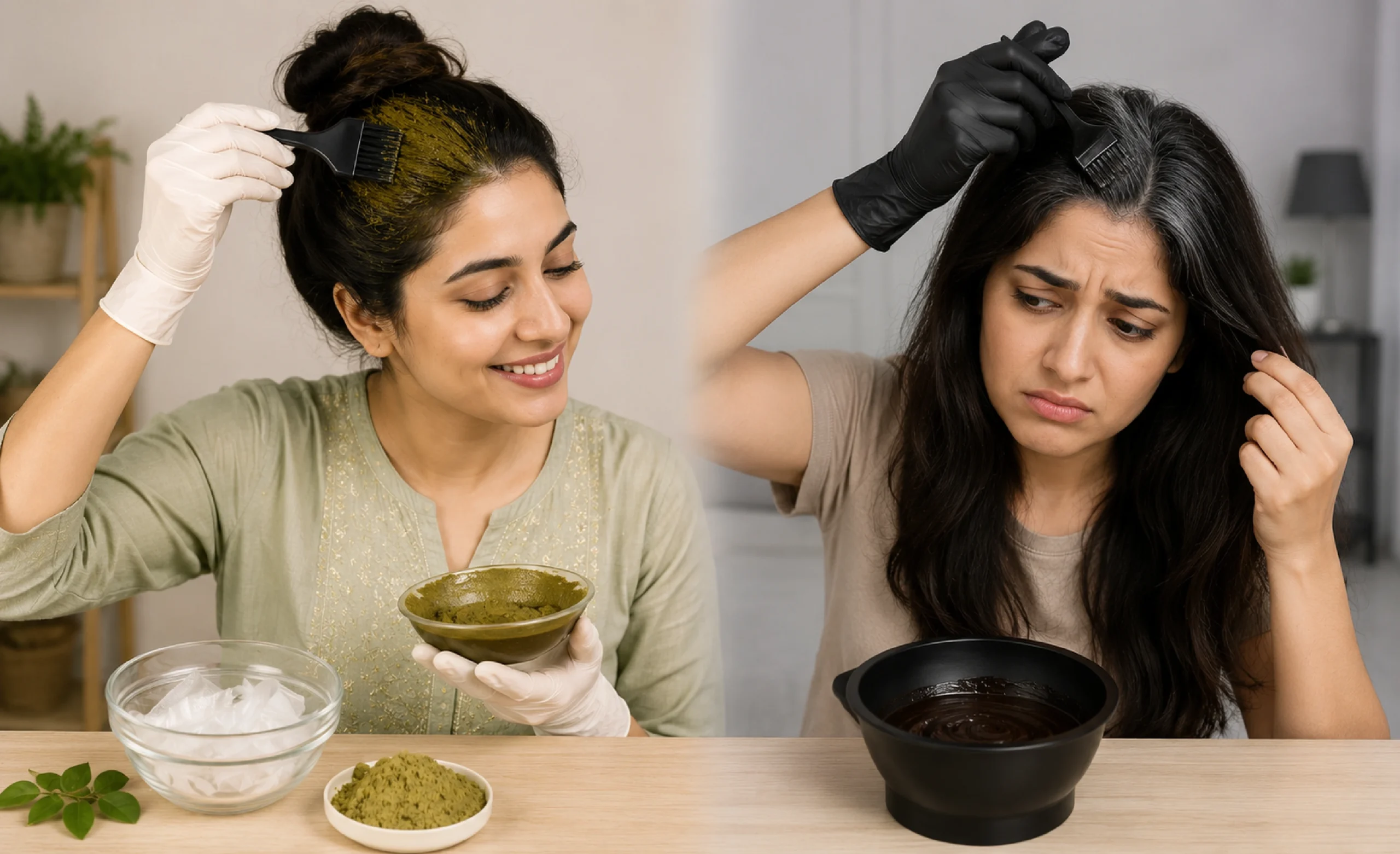
Henna colours the outer layer of the hair instead of changing its natural pigment. This creates a softer, more natural-looking finish. Depending on your original hair colour and the formulation used, grey hair may develop warm copper, reddish-brown, or deeper natural shades.
Many people choose Organic Henna Powder because it colours the hair while helping improve shine and manageability. Those looking for greater convenience often prefer henna paste for hair, which offers a ready-to-use application without preparing the mixture from scratch.
Henna is an excellent choice if your goal is to achieve a natural appearance rather than a dramatic colour transformation.
Hair Colour for Grey Hair
Modern hair colour products are formulated to provide more consistent and predictable grey coverage. They penetrate the hair more effectively and are available in a wide range of shades to suit different preferences.
If you prefer a rich, creamy consistency, creme hair color is often chosen for full-head colouring. For users who prefer easier application and even distribution, gel hair color offers another practical option.
Both formulations are designed to make covering stubborn grey hair quicker and more reliable.
Quick Comparison
| Goal | Better Choice |
| Natural-looking finish | Henna |
| Complete grey coverage | Hair Colour |
| Consistent colour | Hair Colour |
| Traditional colouring | Henna |
| Wider shade options | Hair Colour |
Expert Tip
The amount of grey hair you have matters more than most people realise. If only a few strands have turned grey, henna may provide the natural result you’re looking for. If more than half your hair is grey, modern hair colour generally offers more even and predictable coverage.
2. Which Lasts Longer?
One of the biggest misconceptions is that either henna or hair colour permanently solves grey hair.
In reality, neither does.
As your hair grows, new grey roots will continue to appear regardless of the colouring method you choose.
Henna
Henna gradually fades over time while maintaining a softer appearance. Since it coats the hair shaft naturally, colour often fades more evenly rather than disappearing suddenly.
Hair Colour
Hair colour generally maintains shade consistency for longer but requires regular root touch-ups as new hair grows.
Instead of asking:
“Which lasts longer?”
A better question is:
“Which maintenance routine suits my lifestyle?”
3. Which Is Better for Hair Health?
Many people believe colouring automatically damages hair.
This isn’t always true.
The quality of the product, the ingredients used, and proper aftercare have a much greater impact than simply choosing henna or hair colour.
Henna
People often choose henna because it colours while helping improve the appearance of their hair.
Benefits commonly associated with regular henna use include:
- Improved shine
- Better-looking texture
- Fuller-looking hair
- Softer appearance
This is one reason many users continue using henna paste for hair even after years of colouring.
Hair Colour
Modern formulations have evolved significantly over the years. Many products now include conditioning ingredients that help maintain softness while delivering effective grey coverage.
Following the recommended aftercare routine is just as important as selecting the right colouring product.
Did You Know?
Grey hair often feels rougher than pigmented hair because it naturally loses moisture more easily. Regardless of whether you choose henna or hair colour, using a nourishing hair care routine after colouring can help improve softness and manageability.
4. Which Is Easier to Apply?
Convenience is one of the biggest reasons people switch from traditional colouring methods to ready-to-use products.
Henna
Traditional henna usually involves:
- Preparing the mixture
- Allowing it to rest (depending on the formulation)
- Applying evenly
- Waiting for colour development
- Washing thoroughly
Some people enjoy this traditional self-care ritual, while others prefer a quicker solution.
Hair Colour
Modern colouring products are designed to save time.
Depending on your preference, you can choose:
- gel hair color
- creme hair color
- hair color shampoo
Among these, hair color shampoo is especially popular with people who want a simple colouring routine at home without multiple preparation steps.
5. Which Looks More Natural?
The answer depends on what you mean by “natural.”
Henna creates subtle colour variations because every strand reacts differently.
Hair colour offers:
- More even colour
- Rich pigmentation
- Better shade consistency
- Greater colour selection
Neither approach is better—they simply create different results.
If your goal is a soft, naturally blended appearance, henna may be more suitable.
If you want consistent colour across every strand, hair colour is often the better option.
6. Which Option Requires Less Maintenance?
Maintenance is often overlooked when choosing a colouring product.
Before making a decision, ask yourself:
- How often am I willing to colour my hair?
- Do I have time for regular root touch-ups?
- Do I prefer a quicker colouring routine?
If convenience is your priority, ready-to-use products generally require less preparation.
If you enjoy traditional hair care and don’t mind spending more time during application, henna can be a rewarding option.
Can You Switch Between Henna and Hair Colour?
Yes—but planning is important.
Many people switch from henna to hair colour or from hair colour back to henna during different stages of life.
To achieve the best results:
- Allow enough time between colouring sessions.
- Perform a strand test before applying a new product.
- Follow the manufacturer’s instructions carefully.
- Avoid layering multiple colouring products without understanding how they may interact.
A little patience helps prevent uneven colour and unexpected results.
Which Product Should You Choose?
Use this decision table as a quick reference.
| If Your Priority Is.. | Recommended Option |
| Naturally inspired colouring | Organic Henna Powder |
| Ready-to-use natural colouring | henna paste for hair |
| Fast application | gel hair color |
| Rich and even coverage | creme hair color |
| Quick home touch-ups | hair color shampoo |
| Darker natural-looking shades | natural black hair dye |
| Facial hair colouring | beard hair color |
Common Mistakes People Make
Avoid these common mistakes before colouring grey hair:
- Choosing a product only because it’s popular.
- Ignoring the percentage of grey hair.
- Expecting identical results on every hair type.
- Skipping the patch test.
- Forgetting aftercare.
- Choosing colour before understanding maintenance requirements.
Myth vs Fact
| Myth | Fact |
| Henna always turns hair orange. | The final colour depends on your natural hair colour, formulation, and application process. |
| Hair colour always damages hair. | Modern formulations vary greatly, and quality products used correctly can provide excellent results. |
| Grey hair cannot be coloured naturally. | Naturally inspired colouring products can colour grey hair, though the final shade depends on several factors. |
| One colouring method works for everyone. | The best choice depends on your hair type, goals, and maintenance routine. |
Who Should Choose Henna?
Henna is a suitable choice for people who prefer naturally inspired hair care and want a colouring routine that also supports healthier-looking hair. Unlike products designed primarily for quick colour transformation, henna has traditionally been valued for providing colour while improving the overall appearance of the hair.
You may find henna suitable if you:
- Prefer naturally inspired colouring ingredients.
- Want colour along with conditioning benefits.
- Have low to moderate grey hair.
- Enjoy traditional hair care routines.
- Don’t mind spending extra time during application.
Many people who want gradual, natural-looking colour choose Organic Henna Powder as part of their regular hair care routine. Those looking for a more convenient option often prefer henna paste for hair, which offers similar benefits with easier application.
Who Should Choose Hair Colour?
Hair colour is generally the better option for people looking for convenience, predictable results, and stronger grey coverage.
It may be the right choice if you:
- Have a high percentage of grey hair.
- Want faster colouring.
- Need even colour from root to tip.
- Prefer multiple colour options.
- Colour your hair regularly.
Depending on your preference, creme hair color works well for smooth, even application, while gel hair color is often chosen because it spreads easily and allows better control during application.
If your routine is busy and you want a quicker solution, hair color shampoo can simplify the colouring process by reducing preparation time.
For facial hair, products designed specifically as beard hair color are generally recommended because they are formulated for beard texture and precise application.
Who Should Avoid Each Option?
Every colouring method has situations where it may not be the best choice.
Henna may not be suitable if you:
- Want dramatic fashion shades.
- Need an instant colour change for an upcoming event.
- Prefer very short application times.
- Don’t enjoy preparing traditional colouring mixtures.
Hair Colour may not be suitable if you:
- Prefer only plant-derived colouring ingredients.
- Enjoy the traditional conditioning experience of henna.
- Want softer, naturally varying colour rather than a completely uniform shade.
Understanding these limitations helps you choose a product based on your expectations instead of marketing claims.
Can You Use Henna and Hair Colour Together?
One of the most common questions people ask is whether they can switch between henna and hair colour.
The answer is yes, but it should be done carefully.
If you’re moving from henna to hair colour—or vice versa—it’s best to:
- Wait between colouring sessions instead of colouring repeatedly within a short period.
- Perform a strand test before applying a new product.
- Follow the instructions provided with the product.
- Avoid overlapping multiple colouring treatments unnecessarily.
Taking these simple precautions can help reduce uneven colour and improve the final result.
Real-Life Examples
Example 1: First-Time User
If you’ve recently noticed a few grey hairs and want a subtle, natural-looking change, henna may be enough to meet your needs without switching to regular hair colouring.
Example 2: Working Professional
If you colour your hair frequently but have limited time, ready-to-use hair colour products are generally more practical because they require less preparation and quicker application.
Example 3: Mature Grey Hair
If most of your hair has turned grey and your priority is even coverage, products designed specifically for grey hair often provide more consistent results than traditional colouring methods.
Example 4: Men’s Grooming
Men who regularly colour facial hair usually achieve better precision by choosing products formulated as beard hair color instead of using products intended only for scalp hair.
Quick Decision Guide
Still unsure?
Use this simple comparison.
| If your priority is. | Recommended choice |
| Naturally inspired colouring | Henna |
| Better conditioning | Henna |
| Faster application | Hair Colour |
| Complete grey coverage | Hair Colour |
| Multiple shade options | Hair Colour |
| Traditional hair care | Henna |
| Easy home touch-ups | Hair Colour |
Key Takeaways
- There is no universally “best” colouring method.
- Henna and hair colour are designed for different needs.
- Henna focuses on naturally inspired colouring and conditioning.
- Hair colour focuses on convenience, speed, and predictable grey coverage.
- Your hair type, lifestyle, maintenance routine, and colouring goals should guide your decision.
- Choosing high-quality products and following proper application techniques is more important than simply choosing one colouring method over another.
Frequently Asked Questions
Is henna better than hair colour for grey hair?
It depends on your needs. Henna is ideal for naturally inspired colouring and conditioning, while hair colour is generally preferred for quicker application and more consistent grey coverage.
Can henna completely cover grey hair?
Henna colours grey hair naturally, but the final shade depends on your original hair colour, the formulation used, and the application process.
Which lasts longer: henna or hair colour?
Both require maintenance as new hair grows. Longevity depends on your hair type, washing routine, product quality, and aftercare.
Is hair colour harmful to hair?
Modern formulations vary considerably. Choosing quality products, following the instructions, and maintaining a good hair care routine can help support healthier-looking hair after colouring.
Can I apply henna after using hair colour?
Yes, but allow sufficient time between treatments and perform a strand test before applying a different colouring method
Which option is better for beginners?
Many beginners choose hair color shampoo because it is easy to apply. Those interested in traditional hair care often start with Organic Henna Powder or henna paste for hair.
Can men use the same product for beard colouring?
Products specifically formulated as beard hair color are generally recommended because they are designed for facial hair and allow more precise application.
Which option is better for sensitive hair?
The answer depends on the formulation. Regardless of the product you choose, always perform a patch test and follow the manufacturer’s instructions.
Final Verdict
Choosing between henna and hair colour isn’t about finding a universal winner—it’s about finding the right solution for your individual needs.
If your priority is naturally inspired colouring with conditioning benefits, henna remains a trusted choice that has been used for generations. If you value quicker application, predictable results, and wider shade options, modern hair colour products provide practical solutions for everyday colouring.
Instead of following trends, take time to understand your hair, identify your colouring goals, and choose products that suit your lifestyle. The right product, combined with proper application and aftercare, will always deliver better long-term results than simply choosing what is most popular.
Whether you’re exploring Organic Henna Powder, henna paste for hair, natural black hair dye, gel hair color, creme hair color, hair color shampoo, or beard hair color, selecting a high-quality product that matches your hair needs is the best way to achieve healthy-looking, confident results.