Before you add another serum to your shopping cart, take a look at your kitchen shelf. The ingredients you reach for while cooking may have a place in your haircare routine, too.
Think of amla, curry leaves, methi and hibiscus. These familiar plants have featured in Indian haircare traditions for generations, long before elaborate routines filled our bathroom shelves. Today, they are finding their way back into homemade masks, herbal cleansers and plant-based haircare products.
But there is a catch: natural ingredients are not magic fixes. The real benefit comes from knowing what an ingredient is traditionally used for, how to use it safely and whether it makes sense for your particular hair concern.
The Kitchen Ingredients That Deserve a Place in Your Haircare Conversation
Amla: The Tangy Fruit With a Haircare History
Amla is more than an ingredient in pickles and chutneys. It has a long history in traditional Indian beauty rituals and is widely used in herbal haircare preparations.
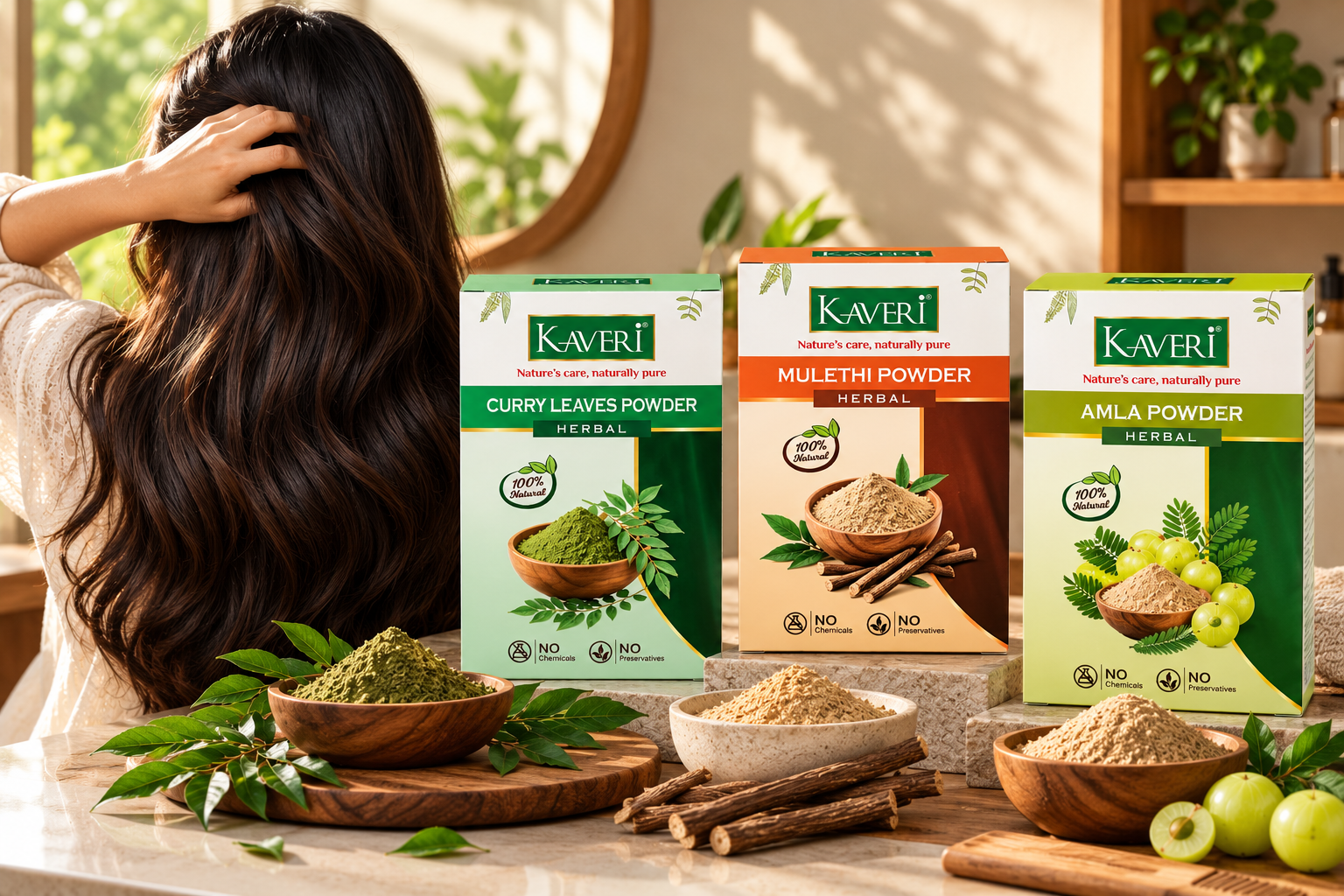
Amla powder is a convenient way to explore this ingredient. Mixed with water according to the product instructions, it can be used as a rinse-off hair mask. Some people include it in their routine when they want to experiment with traditional plant-based care, although strong clinical evidence for its ability to stimulate hair growth is still limited.
The trick is to resist the temptation to mix every available herb into one bowl. Start with one ingredient, see how your scalp responds and keep the rest of your routine familiar.
Curry Leaves: From Tadka to Traditional Haircare
Curry leaves are usually associated with the unmistakable aroma of a freshly prepared Indian meal. In traditional haircare, they are also used in herbal oils and other preparations.
Curry leaves powder offers another way to incorporate the plant into a hair mask. However, it should not be confused with a proven treatment for hair loss or premature greying. Those claims require stronger scientific evidence than traditional use alone can provide.
If your hair feels rough or looks dull, a conditioning product may make a more noticeable difference than adding another herbal ingredient. Curry leaves can be part of your experiment, but they do not replace the basics.
Methi: The Ingredient That Already Knows Its Way Around Your Kitchen
Methi is one of those ingredients that rarely needs an introduction in an Indian home. It appears in everyday cooking, but it is also familiar in homemade haircare recipes.
Fenugreek powder can be mixed with water to form a paste and used as a rinse-off mask. Its consistency may help coat the hair temporarily, making it feel smoother. The results are not the same for everyone, and there is insufficient evidence to treat it as a reliable hair-growth solution.
One practical tip: prepare a small quantity and rinse it out thoroughly. A homemade mask should not leave you spending the next hour trying to remove stubborn residue from your hair.
Hibiscus: A Flower With a Place in Haircare
Hibiscus is known for its vivid colour, but the plant has also been used in traditional haircare routines. It appears in herbal oils, masks and powdered preparations.
Hibiscus powder can be combined with a suitable base to make a rinse-off mask. Depending on your hair, the preparation may help it feel softer, although evidence supporting claims of substantial hair growth remains limited.
Keep the mixture simple. If you combine hibiscus with five other powders on your first attempt, you will have no clear idea which ingredient your hair liked—or which one caused irritation.
Haircare Is Not Just About What You Apply
A common mistake is to treat every hair concern as a problem that needs another mask. In reality, dry ends, an oily scalp, breakage and excessive shedding can have very different causes.
That is where a few other traditional ingredients enter the picture.
Reetha powder is traditionally used in hair-washing preparations because soapnuts contain naturally occurring saponins. It may be an option for people interested in herbal cleansing, but homemade preparations can vary in strength and may irritate sensitive skin or eyes.
Shikakai powder is another traditional cleansing ingredient. It is often included in herbal hair-wash blends, though it may not remove heavy oil or styling-product buildup as effectively as a formulated shampoo.
For those interested in traditional scalp-care rituals, brahmi powder is commonly found in herbal hair masks and preparations. Its traditional reputation is well established, but reliable evidence that it promotes hair growth is limited.
And then there is bhringraj powder, a familiar name in Ayurvedic haircare. It is widely used in traditional formulations, but it should not be considered a guaranteed solution for hair fall or thinning.
You do not need to use all four. Choose according to the purpose of the product, and remember that a well-formulated shampoo and conditioner may be more useful than replacing your entire routine with homemade mixtures.
Not Every Herbal Powder Belongs on Your Head
Walk through a herbal beauty store and you may find dozens of powders that sound equally appealing. The names can be confusing, especially when many are marketed for hair, skin and general wellness at the same time.
Moringa powder is known for its nutritional value as a food ingredient, but applying it to the scalp is different from consuming it. There is not enough strong evidence to recommend it as a hair-growth treatment.
Tulsi powder and neem powder appear in traditional personal-care preparations. Their presence in herbal products does not automatically mean they are suitable for every scalp, particularly one that is already dry, itchy or irritated.
Other ingredients have different traditional applications. Mulethi powder is associated with licorice and appears in various cosmetic preparations. Jatamansi powder is used in some traditional herbal haircare products, while indigo powder is used in certain plant-based hair-colouring routines. Indigo products intended for colouring should be used according to their specific instructions, not treated as ordinary conditioning masks.
Then there are ingredients more commonly associated with skincare. Ubtan powder is traditionally used in cleansing and beauty rituals, while red sandalwood powder appears in some face-pack preparations. Multani mitti is valued for its absorbent properties, making it more commonly associated with masks for oily skin than with conditioning dry hair.
You may also encounter manjistha powder, lemon peel powder, turmeric powder, aloe vera powder, beetroot powder, ashwagandha powder, arjun chaal powder, bael leaf powder, nagarmotha powder and katha powder in herbal product collections.
Their uses vary considerably. Some are associated with traditional skincare, others with colouring or specialised herbal preparations. None should be assumed to improve hair growth simply because it is plant-derived.
The takeaway is simple: choose an ingredient for a clear reason, not because a long list of ingredients makes a product sound more powerful.
How to Experiment Without Turning Haircare Into Homework
You do not need a shelf full of powders to build a thoughtful routine. In fact, starting with fewer ingredients makes the whole process easier.
- Identify your concern. Is your hair dry, difficult to detangle, weighed down by product buildup or breaking because of heat styling? Different concerns call for different approaches.
- Start with one ingredient. Avoid mixing several unfamiliar powders together, especially if you have a sensitive scalp.
- Check how the product is meant to be used. A powder intended for hair colouring or facial skincare may not be suitable for a hair mask.
- Patch-test before wider use. Stop if you notice burning, itching, redness or swelling. Avoid applying powders near your eyes.
- Keep your regular care routine. Continue using a suitable shampoo and conditioner, reduce excessive heat and avoid tight hairstyles that pull on the roots.
- Know when to seek help. Persistent scalp irritation, sudden shedding or noticeable thinning should not be managed with herbal masks alone.
Natural does not automatically mean gentle, and leaving a mask on for longer does not guarantee better results.
So, What Is the One Thing Your Kitchen Is Missing From Your Hair Routine?
It may be amla. It may be methi.Or it may be that your hair does not need another ingredient at all.
The more useful lesson is to look beyond the promise on the label and understand what your hair actually needs. Traditional ingredients can make haircare feel personal and familiar, but their benefits depend on the ingredient, the formulation and the individual using it.
Start small, stay curious and pay attention to how your hair responds. You might discover a traditional ingredient that fits comfortably into your routine—or realise that consistent cleansing, conditioning and gentler styling were the changes worth making all along.
Sometimes, better haircare begins not with buying more, but with choosing more thoughtfully.