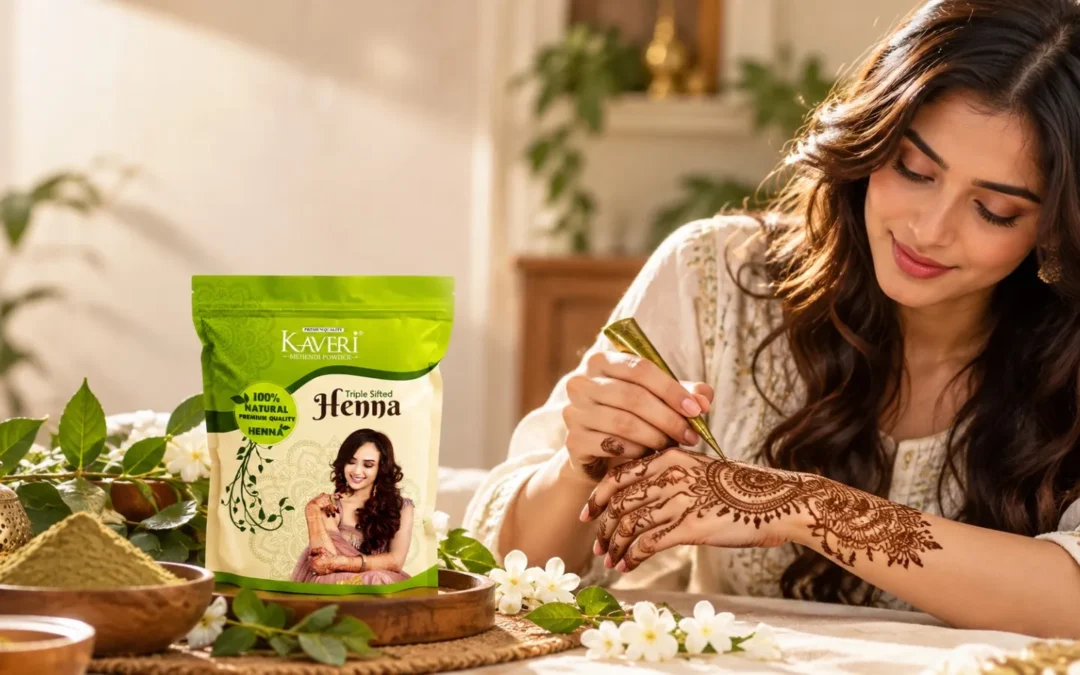
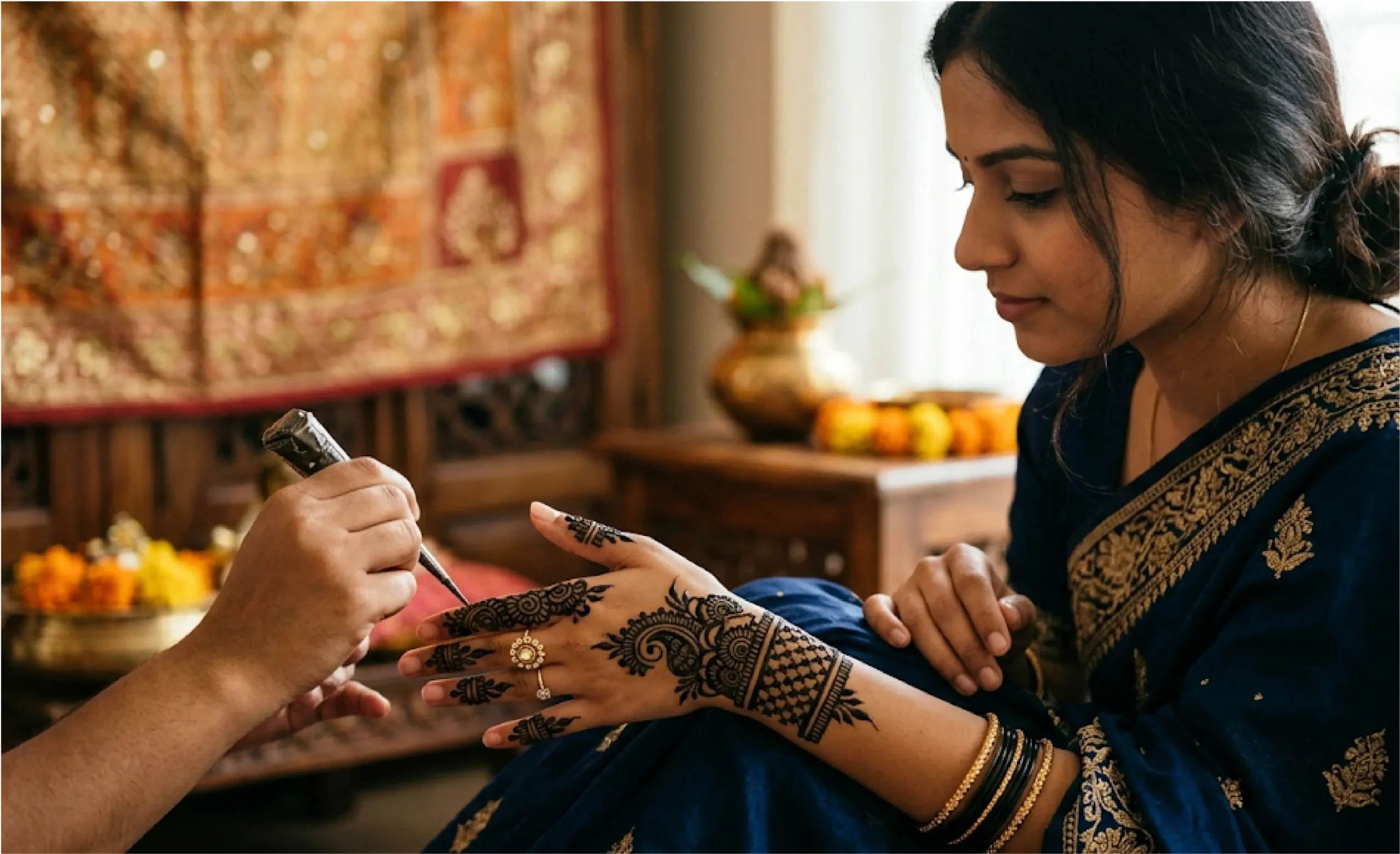
Black mehendi is not always safe because many products contain a chemical called PPD (Paraphenylenediamine) that creates a dark black stain. This chemical can cause skin irritation, allergies, or burns in some people. In contrast, natural henna mehendi made from plant leaves is generally safer and produces a reddish-brown color instead of black.
Therefore, understanding the difference between black mehendi and natural henna is essential before applying it on skin or hair.
What Is Black Mehendi?
Black mehendi refers to a mehendi product that gives a dark black stain very quickly. However, traditional mehendi made from the henna plant does not produce a black color naturally.
Instead, pure henna usually stains the skin in orange, reddish-brown, or deep maroon shades. Because of this, some manufacturers add chemical dyes to achieve the darker black color people often want.
Today, many people prefer plant-based mehendi products available through trusted brands and platforms like the kaveri mehendi website, where users can find products made with more natural ingredients.
Why Black Mehendi Can Be Unsafe
The biggest concern with black mehendi is the chemical Paraphenylenediamine (PPD). This chemical is commonly used in permanent hair dyes to create darker shades.
However, when PPD is applied directly to the skin through mehendi, it can cause serious reactions.
Possible Side Effects of Black Mehendi
- Skin irritation or redness
- Burning sensation on the skin
- Blisters or swelling
- Long-term skin sensitivity
- Allergic reactions to hair dyes later in life
Because of these risks, dermatologists often advise people to avoid chemical-based mehendi products and instead choose natural alternatives such as henna mehendi made from pure plant ingredients.
Natural Henna vs Black Mehendi
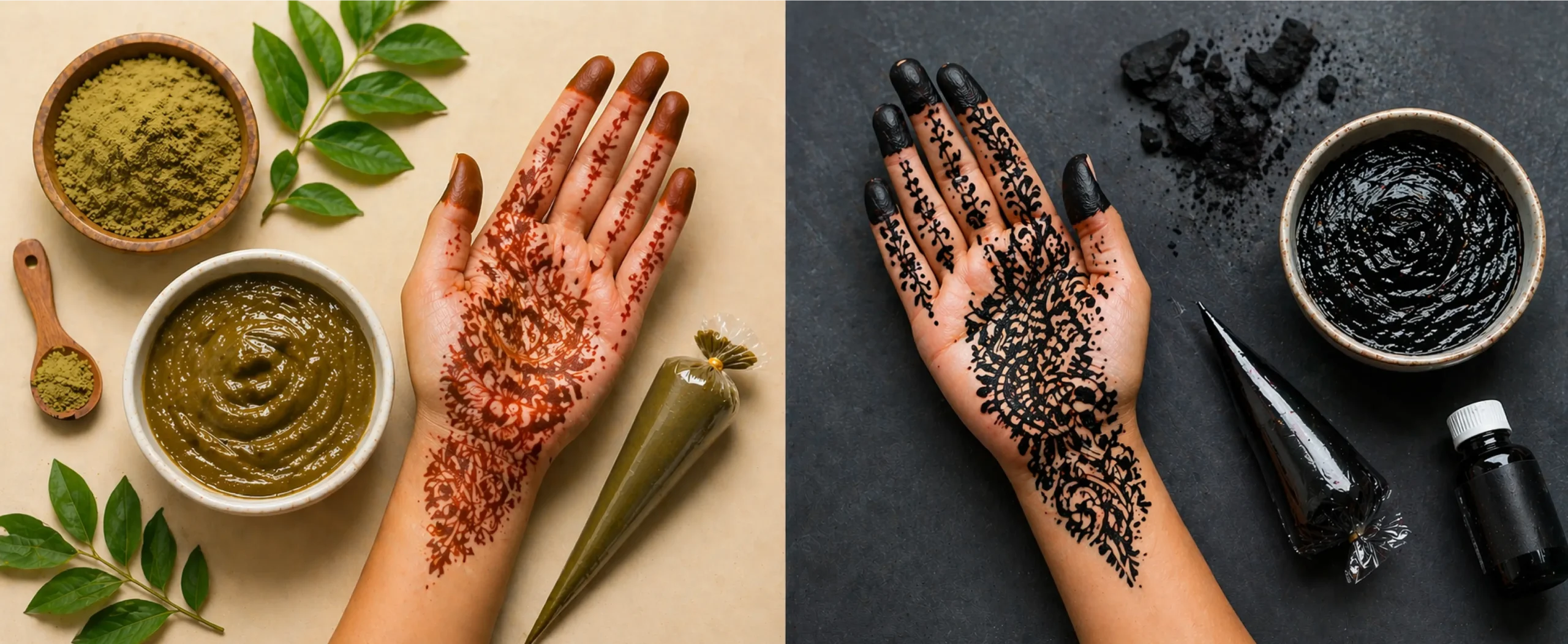
Understanding the difference between natural henna and black mehendi can help you choose a safer option.
| Feature | Natural Henna | Black Mehendi |
| Color | Reddish-brown or maroon | Dark black |
| Ingredients | Henna plant leaves | Often contains PPD chemicals |
| Skin Safety | Generally safe when pure | May cause irritation or burns |
| Color Development | 6–24 hours | Often instant |
For traditional mehendi designs, many people prefer a natural mehendi cone because it provides convenience while maintaining a more natural formula.
Signs That Mehendi May Contain Chemicals
Before applying any mehendi, it is important to check whether it is natural or chemically altered.
Here are a few warning signs:
- The mehendi turns jet black within minutes
- The smell is strong or chemical-like
- The ingredient list does not mention henna
- The product claims instant black color
Natural mehendi takes time to develop its stain, so extremely fast color results can indicate added chemicals.
Safer Alternatives to Black Mehendi
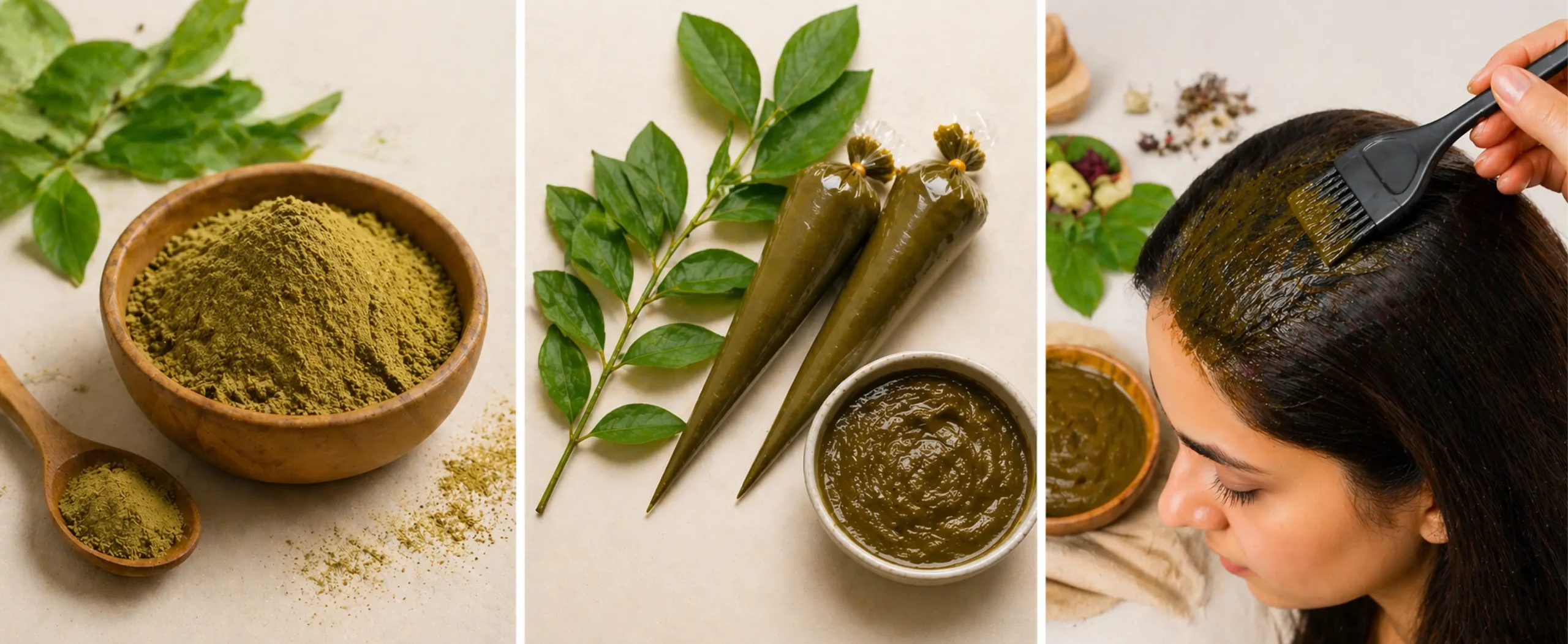
If you want beautiful mehendi designs or natural hair coloring, there are safer alternatives available.
1. Pure Henna Powder
Using 100% natural henna powder is one of the safest ways to apply mehendi for skin designs or hair coloring. Many people also use henna powder for hair because it provides natural color while conditioning the hair.
2. Herbal Mehendi Cones
Ready-to-use cones made with plant-based ingredients are convenient and safer. For example, a herbal mehendi cone allows users to apply mehendi designs easily while reducing the chances of chemical exposure.
3. Natural Hair Coloring
For hair coloring, many people prefer natural henna hair color instead of chemical dyes. These products can help cover grey hair while maintaining hair health.
Additionally, individuals looking for a chemical free hair color often turn to henna-based options for a more natural approach.
How to Use Mehendi Safely
To minimize the chances of allergic reactions, follow these simple precautions.
Always Do a Patch Test
Apply a small amount on your arm and wait 24 hours to check for reactions.
Check the Ingredient List
Look for plant-based ingredients and avoid products containing PPD.
Choose Trusted Hair Care Products
Using reliable natural hair care products along with henna can help maintain both scalp and hair health.
Avoid Instant Black Stains
Natural mehendi develops gradually and does not turn black instantly.
What Dermatologists Say About Black Mehendi
Dermatologists often warn that black mehendi containing PPD can cause severe skin reactions. In some cases, the reaction may leave permanent scars or make a person sensitive to many hair dyes later in life.
Therefore, experts usually recommend choosing natural henna-based hair color instead of chemical dyes when coloring hair.
The Bottom Line
Black mehendi may look attractive because of its dark color and quick results. However, many products contain chemicals that can cause irritation or allergic reactions.
On the other hand, natural henna provides a safer and traditional alternative. Choosing plant-based mehendi products and checking ingredients carefully can help protect both your skin and hair.
Whether you are applying mehendi for designs or using it as a natural hair dye, selecting high-quality henna products can make a significant difference in safety and results.
FAQs
1. Is black mehendi harmful to the skin?
Black mehendi can be harmful if it contains chemicals like PPD. These substances may cause skin irritation, burns, or allergic reactions.
2. Why does natural mehendi not turn black?
Natural henna produces reddish-brown shades. A pure black stain usually indicates that chemical dyes have been added.
3. Can black mehendi cause allergies?
Yes. Some people develop allergic reactions to the chemicals used in black mehendi, especially PPD.
4. How can I check if mehendi is natural?
Check the ingredient list, avoid products promising instant black color, and perform a patch test before applying.
5. Is natural henna safe for hair coloring?
Yes. Pure henna is widely used as a natural hair coloring option and can help improve hair texture while adding color.